The 42nd edition of the Warsaw International Film Festival will take place from October 9 to 18, 2026. The festival is one of the established international competitive film festivals in Central and Eastern Europe and regularly provides a platform for German films, both in its competition sections and across other parts of the program. This year, a total of 27 German productions and co-productions are represented in the line-up.
Warsaw is an important film festival for German productions. In previous years, German films have repeatedly proved popular with Warsaw audiences. In 2021, Florian Dietrich’s TOUBAB won the Audience Award in the Feature Film category, while the German-British co-production F@CK THIS JOB by Vera Krichevskaya was named Best Documentary in the audience vote ex aequo. Most recently, in 2025, the Iranian-German-American co-production CUTTING THROUGH ROCKS by Sara Khaki received the Audience Award in the Free Spirit section.
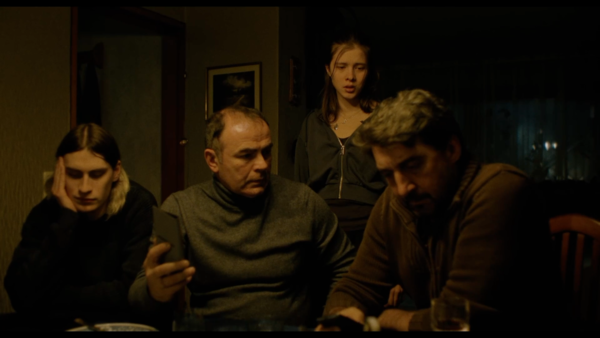
In 2026, the German line-up continues this strong presence at the Warsaw International Film Festival. The International Competition, the festival’s main competition, will present FEBRUARY, SEVEN DAYS by Tatjana Moutchnik. In the drama, two different ideas of family identity collide when a man from Odesa and his son travel to Germany to visit his brother for their mother’s funeral, one day before the war in Ukraine breaks out. The film explores everyday life in a state of emergency and the sense of responsibility toward both country and family.
The Competition 1-2 section is dedicated to first and second feature films by directors from around the world and highlights emerging talents in international cinema. Germany is represented by FRIEDA by Felix Hassenfratz. In 1984, eight-year-old Frieda lives in the southern German countryside. She is the best storyteller around, her imagination knows no bounds, and her parents can never be quite sure whether everything she tells them really happened. But when Frieda discovers a secret her parents have been keeping, she becomes an investigator into her own family’s history.
Three majority German productions are competing in the Documentary Competition. END OF THE WALL by Laurentia Genske will celebrate its world premiere in Warsaw. The documentary is set in the remote Sonoran Desert, where the border wall between the United States and Mexico comes to an abrupt end. People cross the border there at night, either to seek asylum or to make their way through the desert undetected. END OF THE WALL follows both those arriving in this isolated landscape and the volunteers who provide them with water, food and information.
MEANWHILE IN NAMIBIA by Jonas Spriestersbach celebrated its world premiere at Visions du Réel in Nyon, Switzerland, and was subsequently screened at DOK.fest München. The Munich festival, in turn, opened with INGEBORG BACHMANN – SOMEONE WHO WAS ONCE ME by Regina Schilling, which also celebrated its world premiere there.
The Encounters section presents current international feature films, brings together titles that have already appeared on the festival circuit and awards an Audience Award. This year, the section includes the German productions EVERYTIME by Sandra Wollner and YELLOW LETTERS by İlker Çatak, both of which are also set to enter the Oscar race, as well as HOME STORIES by Eva Trobisch and NO GOOD MEN by Shahrbanoo Sadat, alongside several other minority German co-productions.
Three German films have been invited to the Short Films Competition. Sin Aghazadeh’s A LETTER TO HOME centers on a letter sent from exile that never reaches its destination, raising profound questions about displacement and identity. METEORIT by Elisabeth Werchosin follows a foreigner who arrives in a Moldovan village in search of a meteorite that has struck nearby. THE TRUE TYPE by Nicole Humiński explores how the idealized image of the “perfect” Holstein cow reflects the interplay of aesthetics, breeding, standardization, and industrial efficiency in modern livestock farming.